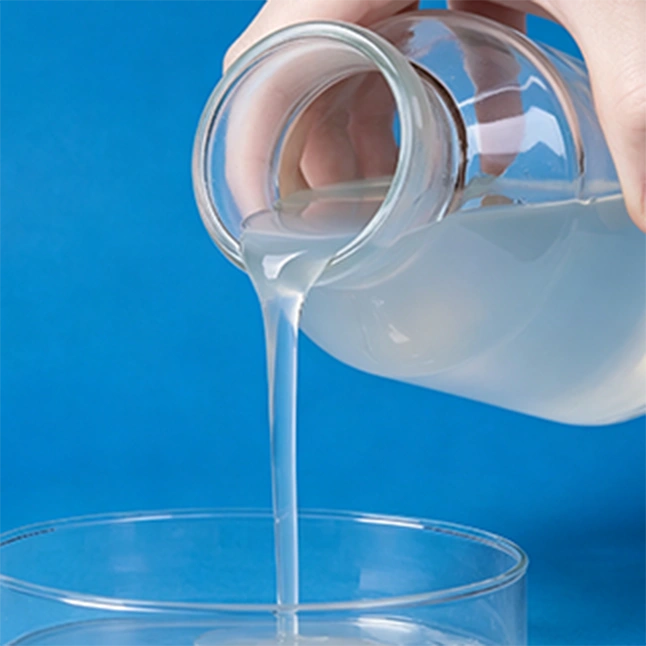
Silica sol precision casting, also known as investment casting or lost-wax casting, is an advanced manufacturing process that utilizes silica sol as a binder to produce high-precision metal parts with excellent surface quality. Its core advantage lies in achieving near-net-shape forming, making it particularly suitable for complex structures, thin-walled components, and high-melting-point alloy castings.
Completed shell assemblies are placed in steam or hot water to melt and remove internal wax patterns, creating hollow cavities.
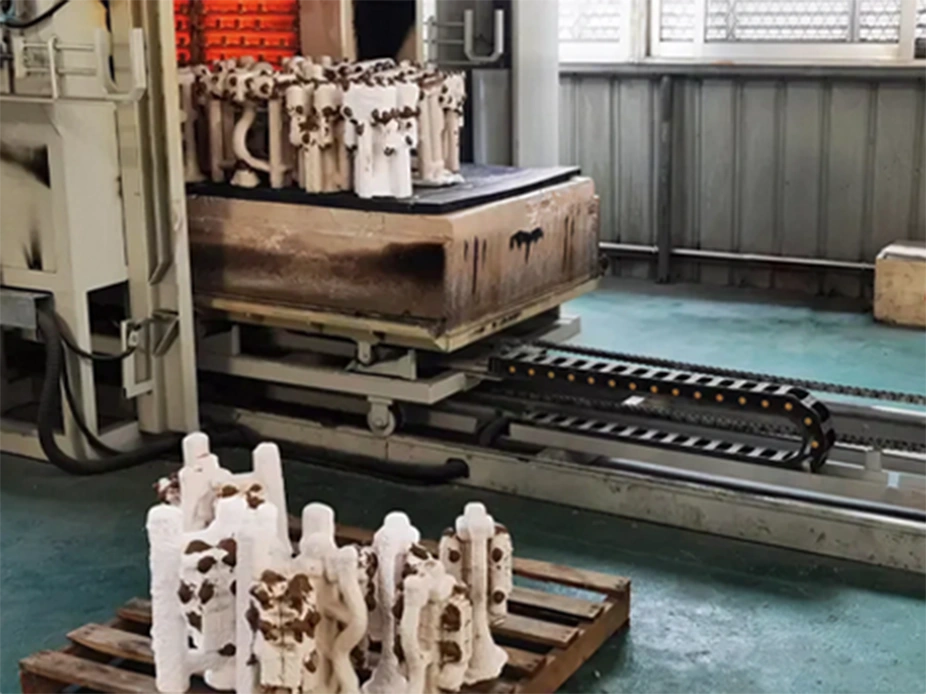
Dewaxed shells are fired in high-temperature furnaces (typically 800°C-1100°C) to thoroughly eliminate residues and enhance high-temperature strength and dimensional stability.
Casting dimensional tolerances reach CT4-CT7 levels, with surface roughness of Ra 1.6-6.3μm. Complex and fine geometries can be replicated, significantly reducing or eliminating machining requirements.
Particularly proficient in casting high-melting-point, difficult-to-machine high-performance alloys such as stainless steel, superalloys, and titanium alloys.
Silica sol shells demonstrate excellent high-temperature strength, dimensional stability, and pattern reproduction capability, suitable for thin-walled and large-size castings.
Silica sol is a water-based binder, and the dewaxing process generates no harmful solvent vapors.
Based on part drawings, molds are manufactured from metal (steel/aluminum) or high-precision plastic. The cavity is the precise inverse of the part, with tolerances typically ≤±0.05mm.
Molten pattern wax (medium-temperature wax, low-temperature wax, etc.) is injected into the mold under specific temperature (e.g., 54±2℃) and pressure (e.g., 4.2MPa), then cooled to obtain wax patterns identical to the final casting shape. Wax materials undergo rigorous pretreatment including settling dehydration, filtration, and temperature holding to remove moisture and impurities.
Qualified individual wax patterns are welded onto a wax gating system to form a "wax tree" assembly, optimizing pouring efficiency.
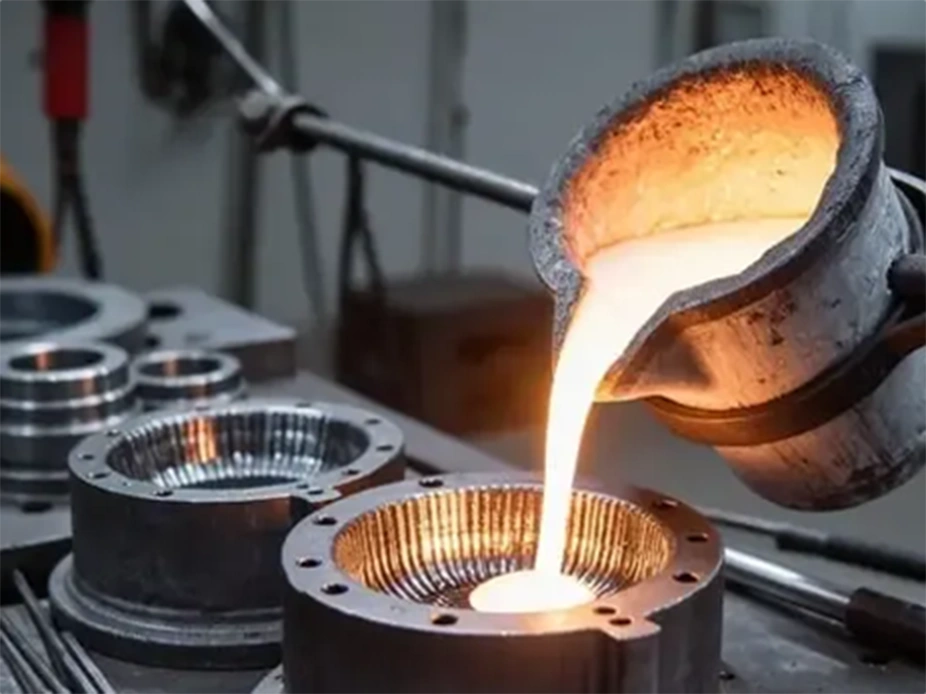
Metals (e.g., stainless steel, superalloys) are melted and poured into preheated high-temperature shells. Pouring may be conducted under atmospheric pressure or protective atmosphere.
After solidification and cooling, shells are removed through vibration or water explosion. Gating systems are cut off, followed by blasting and grinding.
Heat treatment, machining, surface treatment (e.g., passivation, polishing), and final inspection are performed as required.
This critical step builds multi-layer ceramic shells on the wax assembly through repeated cycles of dipping, stuccoing, and drying.
Silica sol (nanometer-scale silica colloidal solution, typically 28%-32% SiO₂ content) is mixed with refractory powders of various particle sizes (e.g., zircon flour, mullite sand) to form uniform slurry.
Face Coat :
Fine-grade slurry and sand (e.g., zircon sand) are used to achieve high surface finish.
Back-up Coats :
Coarser slurry and sand (e.g., mullite sand) are applied to increase shell strength and permeability.
After each coat, shells are dried in controlled temperature and humidity conditions (e.g., 20-25℃, 50%-60% RH) for sufficient time (typically 12-24 hours). This allows silica sol dehydration and polycondensation to form a gel network, imparting shell strength. This process requires strict control to prevent cracking from excessively rapid drying.
This process is widely applied in demanding high-end fields including aerospace (e.g., turbine blades), medical devices (e.g., bone implants), and automotive industry (e.g., turbocharger impellers), where stringent part performance requirements must be met.
 ATHY CHEMICAL